

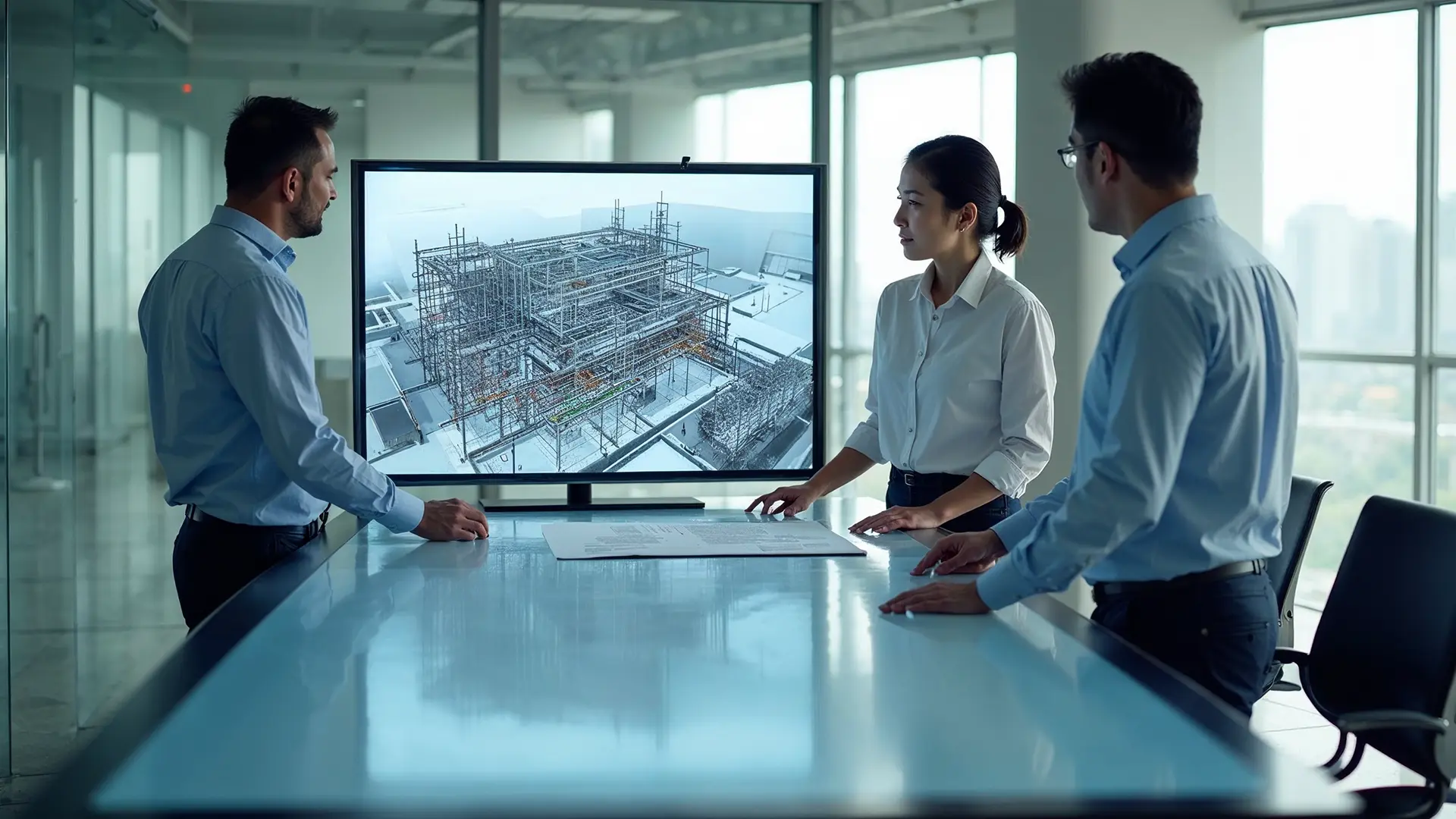
In complex industrial facilities, a design can be technically correct and still create problems during construction.
This often happens when constructability is considered too late in the project lifecycle.
A system may meet engineering requirements on paper, but if it is difficult to install, maintain, coordinate or commission, project teams may encounter avoidable challenges once work reaches site.
For facilities such as semiconductor plants, cleanrooms, data centres and process utility-intensive environments, constructability is not simply a construction concern. It is an engineering consideration that should be addressed long before construction begins.
What is constructability?
Constructability refers to how effectively a design can be translated into a buildable, practical and efficient construction solution.
In simple terms, constructability asks a straightforward question:
Can this design be built safely, efficiently and as intended under real project conditions?
A constructable design considers factors such as:
- Installation sequence
- Site constraints
- System accessibility
- Coordination between disciplines
- Material and equipment logistics
- Future maintenance requirements
- Testing and commissioning requirements
The goal is to reduce uncertainty before construction starts.
Why constructability matters in M&E projects
Mechanical and electrical systems are often among the most heavily coordinated elements within a facility.
HVAC systems, electrical distribution, process utilities, fire protection systems, Building Automation Systems and Extra Low Voltage infrastructure must often share the same physical space while meeting technical, operational and authority requirements.
Without sufficient constructability review, project teams may encounter:
- Service clashes during installation
- Restricted maintenance access
- Congested ceiling spaces
- Difficult equipment replacement pathways
- Late-stage design revisions
- Delays during testing and commissioning
- Increased construction costs
Many of these issues are easier and less expensive to address during design than during construction.
Constructability in cleanroom facilities
Constructability becomes particularly important in cleanroom environments.
Cleanrooms depend on precise environmental control, coordinated services and carefully planned maintenance access.
Design decisions involving airflow systems, chilled water distribution, process utilities, exhaust systems and cleanroom equipment layouts can influence:
- Production stability
- Operational reliability
- Contamination control
- Future expansion flexibility
- Maintenance efficiency
A design that appears technically sound may create operational challenges if constructability considerations are overlooked.
This is why constructability should be evaluated alongside performance requirements rather than after design completion.
Constructability in data centre projects
Data centres present a different but equally demanding set of challenges.
These facilities require coordination across multiple systems including:
- HVAC infrastructure
- Electrical distribution systems
- UPS systems
- Fire protection systems
- Monitoring systems
- Telecommunications infrastructure
In many projects, design teams must also consider authority submission requirements, construction sequencing, commissioning activities and operational resilience objectives.
Constructability helps project teams identify potential risks before they reach site, supporting smoother implementation and reducing the likelihood of costly rework.
For mission-critical facilities, constructability is closely linked to project certainty and operational readiness.
Common signs that constructability was considered too late
Project teams often recognise constructability issues when:
- Equipment cannot be installed using the planned access route
- Services compete for limited ceiling or riser space
- Maintenance access is restricted
- Additional redesign is required during construction
- Authority requirements trigger late-stage changes
- Commissioning activities reveal coordination issues
At this stage, solutions are usually more disruptive and more expensive.
Early constructability review helps reduce these risks.
How constructability supports project success
Constructability does not replace engineering design.
Instead, it strengthens engineering design by introducing practical considerations earlier in the project lifecycle.
Benefits can include:
- Reduced rework
- Improved coordination between disciplines
- More efficient installation
- Better maintenance accessibility
- Smoother authority approval pathways
- Improved commissioning readiness
- Greater confidence during project execution
For complex industrial facilities, these outcomes can have a significant impact on project delivery and long-term operation.
Looking beyond the drawings
Construction teams, facility operators and project owners ultimately interact with the completed facility, not the design package.
This is why successful projects require more than technically compliant drawings.
They require designs that can be coordinated, approved, constructed, commissioned and operated effectively.
Constructability helps bridge the gap between design intent and site reality.
For specialist industrial facilities, considering constructability before construction starts is often one of the most effective ways to reduce uncertainty and improve project outcomes.
