

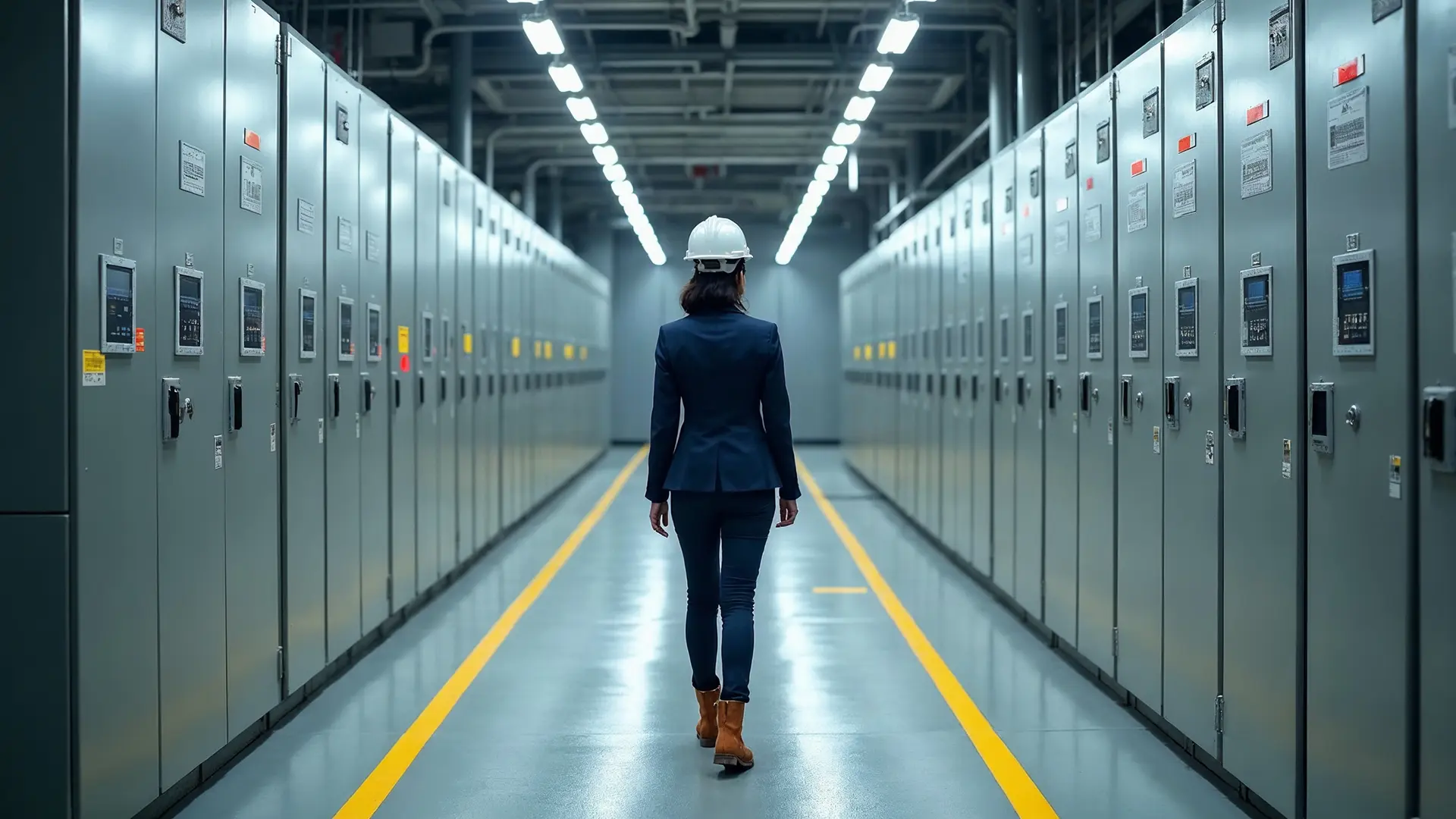
Semiconductor manufacturing facilities depend on far more than production equipment. Behind the manufacturing process is an extensive network of mechanical, electrical and process utility systems that must support precise environmental conditions, demanding equipment requirements and reliable operations.
Planning M&E infrastructure for a semiconductor facility involves five key considerations: production requirements, cleanroom environmental control, electrical and process utility capacity, system coordination, and operational reliability.
Unlike conventional building services, these systems must be designed around the specific needs of manufacturing processes and the equipment they support.
1. Understanding the manufacturing process
The starting point for semiconductor facility M&E design is understanding what the facility will produce and how its manufacturing equipment will operate.
Different production processes can have significantly different infrastructure requirements. Equipment specifications influence electrical demand, cooling loads, utility consumption, exhaust requirements and environmental conditions.
For example, a production tool may require dedicated electrical connections, process cooling water, compressed air or specialised exhaust systems. These requirements must be understood early enough to inform the facility’s overall infrastructure design.
This is why coordination between the facility owner, process equipment suppliers and engineering consultants is important during the planning stage.
2. Designing M&E systems for cleanroom environments
Many semiconductor manufacturing processes take place in cleanrooms where airborne contamination, temperature, humidity and pressure must be carefully controlled.
The mechanical systems supporting these environments may include air handling units, filtration systems, temperature and humidity controls, and pressure management arrangements.
However, cleanroom design involves more than selecting suitable equipment.
Airflow patterns, heat loads, equipment layouts and service penetrations all influence how effectively the required environmental conditions can be maintained.
The applicable cleanliness classification and environmental specifications must be established according to the manufacturing process. Not every semiconductor production area requires the same level of control.
Effective cleanroom M&E planning therefore depends on integrating environmental requirements with the facility’s architectural layout, production equipment and supporting utilities.
3. Planning electrical and process utility infrastructure
Semiconductor facilities can place substantial demands on electrical distribution and process utilities.
Depending on the manufacturing activities, the infrastructure may need to support:
- Electrical power distribution: Supplying production equipment, mechanical systems and supporting facility operations.
- Process cooling water: Removing heat from manufacturing equipment and processes.
- Compressed air and specialist gases: Supporting equipment and manufacturing requirements where applicable.
- Process exhaust: Removing heat, fumes or process emissions according to equipment and safety requirements.
- Monitoring and control systems: Supporting visibility and control of critical operating conditions.
These systems must be designed according to the actual equipment requirements, operating profiles and applicable technical standards.
Capacity is important, but so are distribution arrangements, utility quality, access for maintenance and the ability to support the intended manufacturing operation.
A system that meets the calculated demand may still present operational difficulties if its distribution routes or equipment interfaces are poorly planned.
4. Coordinating M&E systems with production equipment
One of the more demanding aspects of semiconductor facility engineering is coordinating building infrastructure with the requirements of production equipment.
A change in tool layout can affect electrical connections, utility routing, exhaust arrangements and maintenance access. Similarly, limited ceiling space or congested service corridors can constrain how systems are installed.
These interfaces need to be considered across mechanical, electrical, architectural, structural and process-related disciplines.
Technical coordination during design helps identify potential conflicts before construction, when changes can become more disruptive and costly.
For semiconductor projects, the objective is not simply to accommodate every service within the available space. It is to develop a coordinated arrangement that can be constructed, operated and maintained effectively.
5. Considering reliability and ongoing operations
The performance of a semiconductor facility’s M&E infrastructure directly affects its ability to maintain the required manufacturing conditions.
Interruptions to electrical supply, cooling or critical process utilities can affect equipment operation and production activities. The consequences depend on the manufacturing process and the systems involved.
M&E planning must therefore consider the facility’s operational requirements, including appropriate system resilience, maintainability, monitoring and access for servicing.
These considerations become especially important when upgrading or expanding an operating facility, where engineering work may need to be coordinated around ongoing production.
Early planning helps ensure that infrastructure decisions support the facility’s intended operation, rather than focusing solely on initial installation requirements.
Why specialist M&E consultancy matters
Semiconductor facility engineering requires a coordinated understanding of building services, cleanroom environments, process utilities and manufacturing equipment requirements.
The consultant’s role is to translate these requirements into practical engineering designs, coordinate interfaces between disciplines and support technical decisions throughout project development.
At H&H First Consultancy, our experience across semiconductor manufacturing, cleanroom and high-specification industrial facilities informs our approach to specialist M&E design, process utility coordination and construction-stage engineering support.
By considering manufacturing requirements alongside technical, spatial and operational constraints, we help clients plan infrastructure that supports the needs of their facilities.
Planning a semiconductor facility, production expansion or cleanroom upgrade? Contact H&H First Consultancy to discuss your M&E engineering requirements.
