

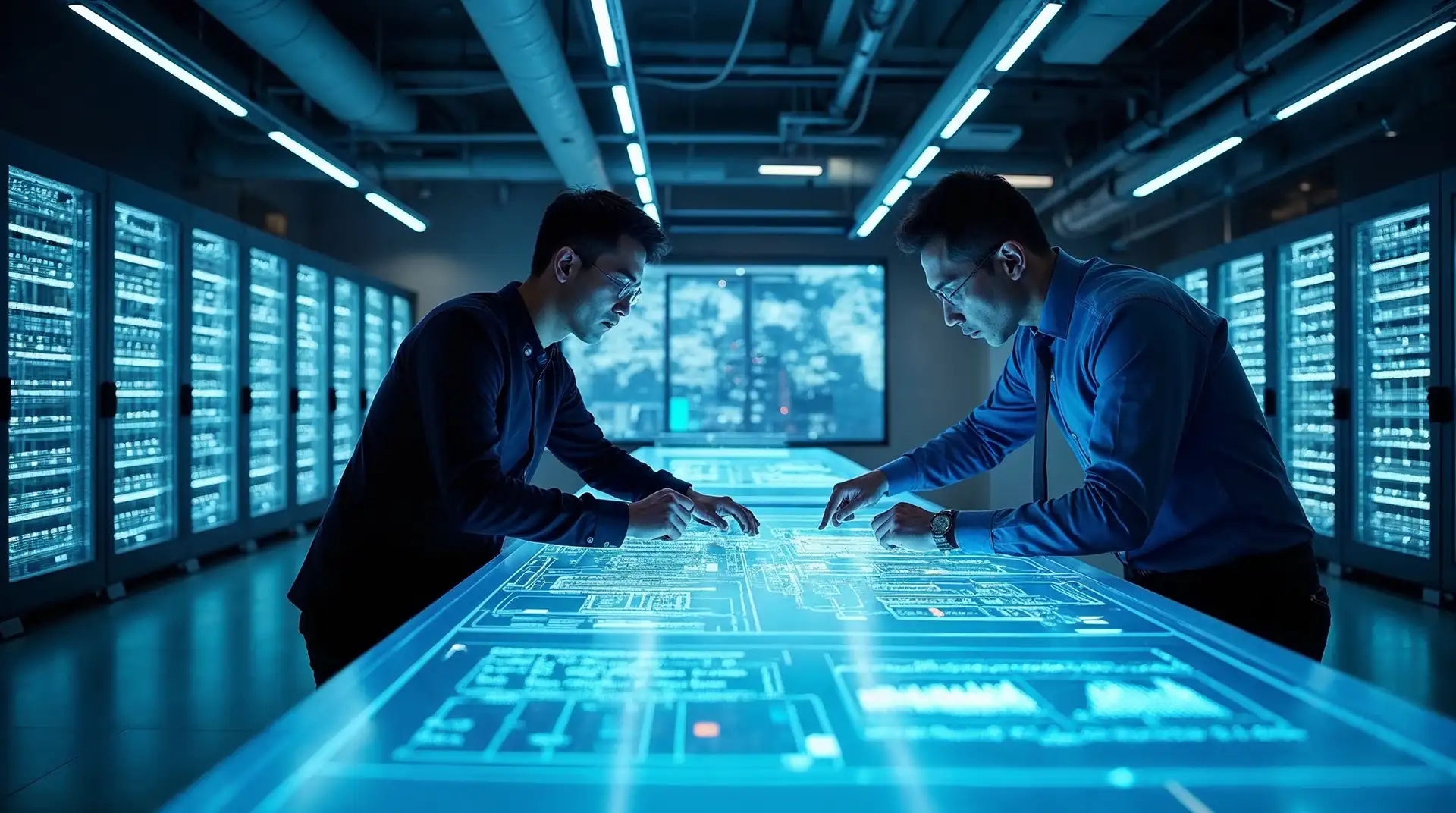
AI workloads are transforming what “uptime” means for data centers. Power demand, heat output, and interdependent systems are growing faster than most legacy facilities were designed to handle. In this environment, reliability alone is no longer enough. Resilience is the new benchmark.
Global studies project data center power demand to increase by over 150% by 2030, driven largely by AI adoption (McKinsey). At the same time, typical rack densities are rising from around 15 kW to more than 60 kW, compressing thermal margins and magnifying every small design inefficiency (CoreSite).
Design assumptions are being rewritten
Higher densities strain more than cooling systems, they stress coordination. When electrical, mechanical, and control systems operate near their limits, a delay in one component can trigger a cascade across others. That’s why resilience depends not on adding redundancy, but on engineering adaptability:
- Smart zoning – Segregating critical systems to prevent fault propagation.
- Integrated control logic – Ensuring power, cooling, and monitoring systems respond as one.
- Maintainability – Designing safe access routes and modular components for intervention without downtime.
Cooling evolves with computing
As workloads become more GPU-intensive, cooling design shifts from airflow management to precision thermal control.
Recent studies in Nature show that advanced cooling such as cold plates and immersion systems can cut energy use and emissions by up to 20%, underscoring the need to design for both efficiency and resilience (Nature, 2025).
Industry data from the Uptime Institute’s 2024 Global Data Center Survey supports this shift. The average facility now operates at a PUE of 1.56, while next-generation, high-efficiency designs are achieving 1.3 or better — proof that resilient engineering delivers measurable gains.
Resilience by coordination
True resilience is about foresight, anticipating how systems behave under stress. Power electronics must handle variable loads from AI clusters. Cooling must adapt to thermal spikes. And all of it must be maintainable, monitorable, and upgradeable.
Designing for resilience means balancing density, efficiency, and accessibility ensuring that the infrastructure of tomorrow can evolve without compromising safety or uptime.
Partnering for resilient performance
At H&H First Consultancy, we help clients translate complex workloads into dependable MEP design strategies. If your next project involves high-density or AI-ready facilities, let’s talk about integrating resilience into your systems from day one.
