

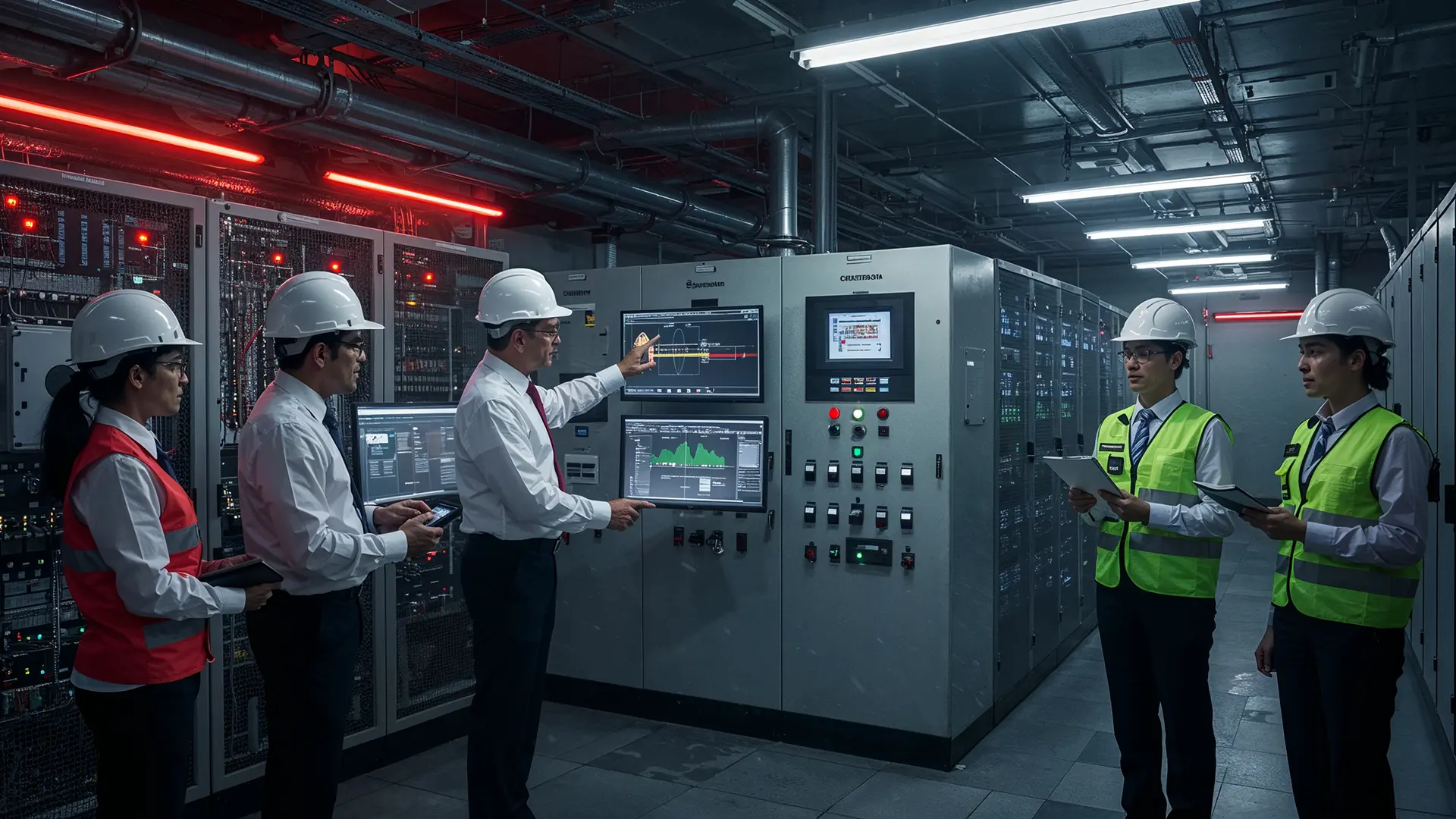
Data centers are often evaluated based on the performance of individual systems. Power infrastructure, cooling capacity and redundancy levels are typically assessed independently during design and commissioning. These elements are critical, but focusing on them in isolation does not fully reflect how a data center performs during operation.
In practice, reliability depends on how these systems are designed and coordinated to work together. A data center may meet all technical specifications at the component level and still experience instability if system interactions are not properly addressed.
Why individual system performance is not enough
Each major system in a data center is designed to meet defined performance criteria.
- Power systems are designed for redundancy and reliability
- Cooling systems are designed to manage heat loads
- Control systems regulate operation and response
While these systems may perform as intended individually, real-world operation introduces conditions where their interactions determine overall performance.
For example, cooling effectiveness is influenced by equipment layout and airflow behaviour, while power system performance may depend on how loads are distributed and managed across the facility.
How systems interact during real operation
Data centers operate as integrated environments rather than a collection of independent systems.
Cooling performance depends on airflow patterns, which are affected by rack layout, containment strategies and heat distribution. Power systems influence thermal load through equipment operation. Control systems coordinate how these elements respond to changing conditions.
These interactions are continuous. As demand fluctuates, systems must respond in a coordinated manner to maintain stable operating conditions.
When systems are aligned, performance remains consistent. When coordination is lacking, small inefficiencies can accumulate and affect overall reliability.
Where coordination challenges typically occur
Coordination issues rarely originate from a single failure. They are often introduced during earlier project stages.
Common areas include:
- design assumptions that do not reflect actual operating conditions
- insufficient alignment between mechanical, electrical and layout planning
- limited consideration of how systems respond during transitions or partial loads
- gaps between design intent and on-site implementation
These challenges may not be immediately visible during commissioning, but can surface over time as the facility operates under varying conditions.
Impact on reliability and long-term performance
When system coordination is not fully addressed, the effects can include:
- inconsistent thermal performance across the facility
- increased energy consumption due to inefficiencies
- reduced resilience during system faults or maintenance
- greater difficulty in maintaining stable operating conditions
In environments where uptime is critical, these factors can directly affect operational reliability and lifecycle performance.
What project teams should address early
For developers, consultants and project teams, improving data center performance requires a coordinated approach from the start.
Key considerations include:
- aligning mechanical, electrical and layout design strategies
- understanding how systems behave under real operating conditions
- planning for system interaction during both normal operation and failure scenarios
- ensuring that design intent is maintained through implementation and commissioning
Addressing these elements early helps reduce risk and supports more predictable performance over time.
Conclusion
Data center performance is not defined solely by the capability of individual systems. It is determined by how effectively these systems are designed and coordinated to operate together.
Focusing on integration, rather than isolated performance, allows facilities to achieve greater reliability, stability and long-term efficiency.
Designing for failure is a fundamental principle in data center engineering. However, maintaining performance during these scenarios depends on how well systems are coordinated to respond as a whole. Reliability is not achieved by redundancy alone, but by how effectively systems interact under real operating conditions.
(You may also be interested in our article on how data centers are designed for failure and reliability.)
H&H First Consultancy approaches data center design with a focus on system coordination, ensuring that mechanical, electrical and supporting systems work together to deliver consistent performance in real-world conditions.
